
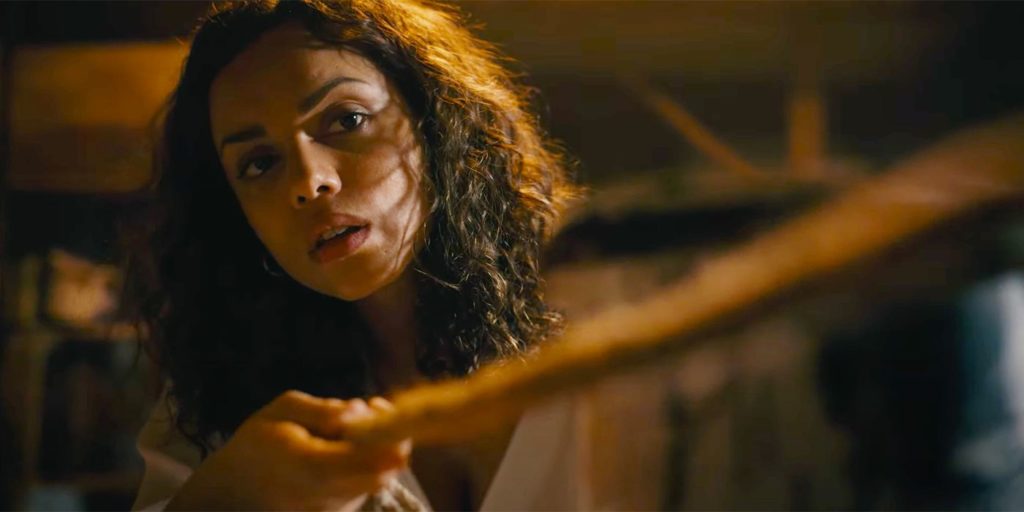
Barbarian, the debut horror film from director Zach Cregger, is proving to be a surprise hit with both audiences and reviewers. The film presents a unique idea, toying with cliches and expectations to convey a narrative full of surprises. It’s riddled with mystery as well, and towards the conclusion it satisfactorily ties up the majority of its loose ends, but like many great horror films, it also leaves certain mysteries unanswered. Notably, the meaning of the title itself is one of the most important concerns that remain after the final credits have rolled. The word “Barbarian” is never explicitly used in the movie and is seldom ever even hinted at. In the end, it is unclear what the statement refers to in the context of the narrative, causing viewers to delve deep, analyse, and come up with a range of hypotheses that provide further insight into the overall story of the movie.
Even the director is hesitant to discuss the title’s actual significance. The title was initially only a stand-in while Cregger composed the script, he admitted in a recent interview with Murphy’s Multiverse. It eventually felt fairly appropriate as the plot developed and stuck throughout the entire production. Even he acknowledges that this justification leaves room for more interpretation.
The setting of the movie is where the title is most clearly expressed. The majority of the action in the film occurs on Barbary Street, a made-up, dilapidated street in the ghetto of Detroit. The setting of Barbarian is used thematically, providing a quiet critique of Detroit’s economic and cultural decline. Due to the fact that “Barbarian” frequently refers to someone who lives outside of civilised civilization, it would be suitable for the term to allude to the street’s poor population. This would be a tragically fitting homage to how people typically regard poorer places on the outside of cities.
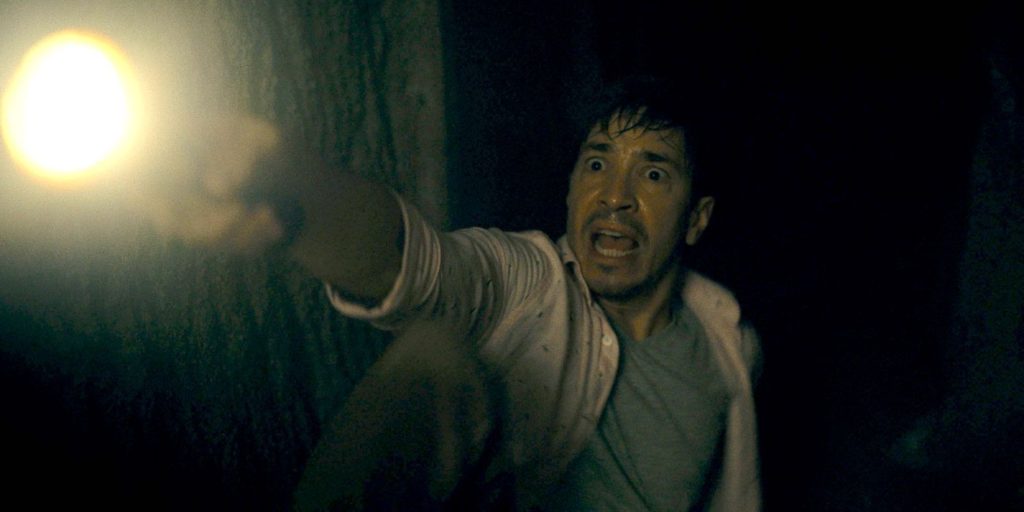 Even so, it begs the question of whether the title refers to all Barbary Street residents or just the main protagonists who reside at the home where the most of the movie’s action takes place. However, it could also refer to the antagonistic squatters who live in the basement or the protagonistic Airbnb visitors that reside there. The latter seems more likely because most Airbnb visitors do not fulfil the definition of a “Barbarian.” The lady who plays the movie’s monster figure and the man who plays the story’s clandestine arch-villain, though, are the two very different members of the basement squatters.
On the surface, the woman—who is simply referred to as The Mother and is actually portrayed by male actor Matthew Patrick Davis—appears to be the more brutal. She is physical, vicious, and animalistic because she is the result of multiple generations of inbreeding. Although the film makes strong inferences about a maternalistic mentality underlying her outward appearance, it is mostly one of instinct rather than reason. She is the one who clearly causes the most terror and destruction, and as such, she merits the moniker “Barbarian.”
However, the man—named Frank and portrayed by character actor Richard Brake—is both the direct source of The Mother’s illness and the indirect perpetrator of her mayhem. In the movie, a flashback reveals that The Mother only exists as a result of Frank abducting women in the 1980s, abusing them sexually in his basement, and then impregnating them over a number of generations to produce The Mother as an incestuous monster. Even though it is done more methodically, this is still barbarous behaviour.
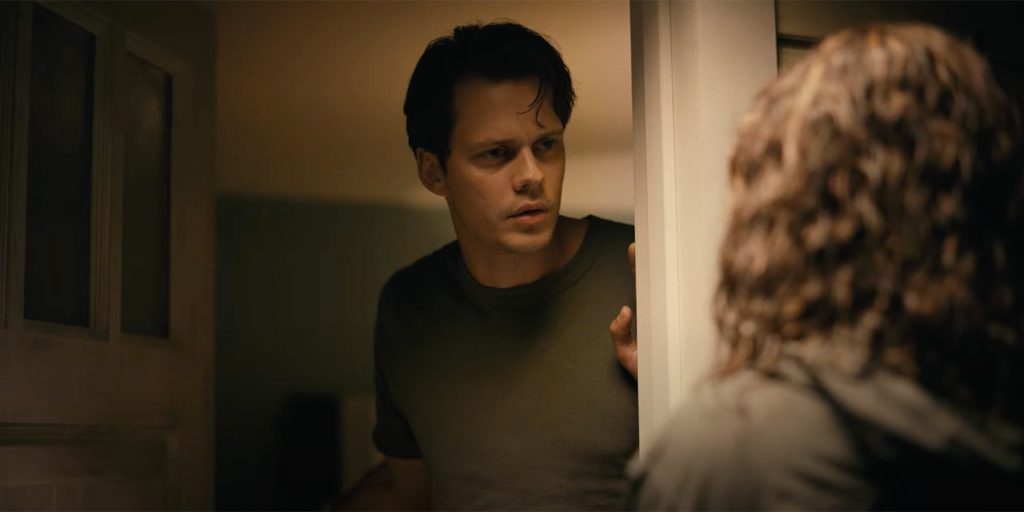 Additionally, “Barbarian” conjures up thoughts of Jason Momoa, Arnold Schwarzenegger, and the stereotypically hypermasculine Hollywood hero in modern pop culture, suggesting that the title could be referring to Frank as part of a depressing commentary on masculinity. Old-school manliness, as promoted by innumerable blockbusters over the years, frequently supported the sexification and objectification of women, even even going so far as to show female characters as prizes for brutal male heroes following their exploits. The 1980s, the same decade that Barbarian flashes back to and depicts Frank using women as prisoners, were notorious for doing this, and it was especially prevalent in antiquated action films of the era. Thus, in a horrifyingly critical way, Barbarian reopens this trope, highlighting the horrors that such toxicity can produce.
This gendered interpretation of the title may prove to be the most nuanced and insightful given that the movie also supports maternal themes, a strong heroine, and additional instances of toxic masculinity in the form of Justin Long’s portrayal of a disgraced television producer in the post-MeToo era and Bill Skarsgrd’s portrayal of a well-intentioned but dangerously overconfident male figure. The title is still open to various interpretations, just like the whole movie. It joins a long history of films with just one word, including Saw, Nope, Us, It, Halloween, Hellraiser, and Predator. Each one benefits from the minimalism it refers to since it encourages critical thought and lets the imagination run frightfully wild.